
Greenwich Most Wanted List Status
Greenwich Police have no public most wanted page. It's missing from the department navigation, the town's search tools, the Police News Flash section, and the Crime Data Portal. That doesn't mean warrants are absent. Some are surely active in town. What's missing is the format: no photo roster, no verified count, no update schedule, no published removal cadence. Fields, photo policy, and refresh rate simply don't apply. Pulling names from news stories or commercial sites to fill the gap would be a mistake.
Why the gap? Connecticut's structure explains it. Greenwich is a town, Fairfield County is a historical label, and county government was abolished statewide generations ago. There's no Greenwich County sheriff, no Fairfield County sheriff's office, no county jail, and no sheriff app. Local policing belongs to the Greenwich Police Department. Courts and correctional custody are state functions. Any site claiming a Fairfield County sheriff wanted list has the jurisdiction wrong.
Greenwich Wanted Listing Fields
No official roster means no local listing format to decode. A standard card with a face, name, physical description, warrant number, or caution flag? Not something to expect here. Police do sometimes issue a selective release tied to one investigation, but that release isn't a full list, and it can linger online long after the case has moved on. The table separates what's documented from what isn't.
| Potential field | Verified Greenwich status |
|---|---|
| Names and photographs | No standing official list or uniform photo policy found |
| Warrant basis or alleged charge | May appear in a selective police release or known court case |
| Last known area and caution flags | No published local wanted-card field set found |
| List count and update date | Not applicable because no list exists |
| Case outcome | Use the Judicial docket, not an arrest announcement |
This distinction prevents a real error. Someone named in an old warrant story may have surrendered by now. They may have appeared in court or reached a later disposition. When Connecticut Judicial records are public, they're the reliable source for what happened after police took action.
Use Greenwich Wanted Information Safely
A selective Greenwich Police notice can still help, as long as you read its date, case context, and current status with care. It's never an invitation to play detective with another person's life. Stick to official sources. Keep your own safety first.
- Confirm that the notice is on an official Greenwich town or Police Department page. Check its publication date and whether it describes an active request for information.
- Read the wording as an charge. Do not infer guilt from a warrant, arrest photo, charge, or police narrative.
- Do not approach, follow, threaten, restrain, or try to arrest anyone. Call 911 if there is immediate danger.
- For non-emergency information about another person, use the official confidential tip channels. Do not post the information publicly.
- Use the court docket only to follow a known public case. The Greenwich arrest-record path also explains how police records and later custody sources differ.
Photos remain where they started. The issuing agency or publisher keeps them, and no gallery of faces gets built here from police notices. That choice matters. An image pulled out of context can paint an old case as breaking news, so leaving it in place preserves the story that belongs with it.
Check Greenwich Warrant Concerns
Greenwich offers no municipal warrant portal for the public. The Connecticut Judicial Case Look-up is the closest tool, and it can surface a criminal or motor-vehicle case that already exists, with public events and disposition details shown by the current interface. Treat it carefully. It is not a full active-warrant search, and a blank result can stem from erasure, sealing, or a case that has not reached the public stage yet.
Worried a warrant names you? Take the legal route, not a search-engine route. A Connecticut lawyer or the clerk at the right court can walk you through the steps. Most Greenwich criminal matters land at Superior Court, Geographical Area No. 1 at Stamford, though venue shifts by case. Court staff explain access procedures well, but they cannot hand out legal advice. Skip the social posts and aggregator sites.
- Gather accurate identifying facts and any known case number without contacting witnesses or other involved people.
- Ask a lawyer to check the concern and explain the proper court process. This is the safest self-check route.
- Use Case Look-up only as a known-case aid. Read the docket status and dates, not just the first charge shown.
- Confirm the correct court through the Judicial directory before appearing or sending records correspondence.
- Resolve the matter through counsel and the court. Do not seek ways to hide, delay, or avoid lawful process.
Need to reach police without an emergency? Greenwich Police non-emergency dispatch answers at 203-622-8004, day or night. The line handles general contact, nothing more. It is not a warrant database and not legal counsel. Reserve 911 for true emergencies and immediate threats.
The Judicial Branch's criminal and motor-vehicle court-record FAQ lays out why a public case can vanish from view later on. Its access limits sit at the heart of any careful warrant self-check, which is why the official guidance appears below.
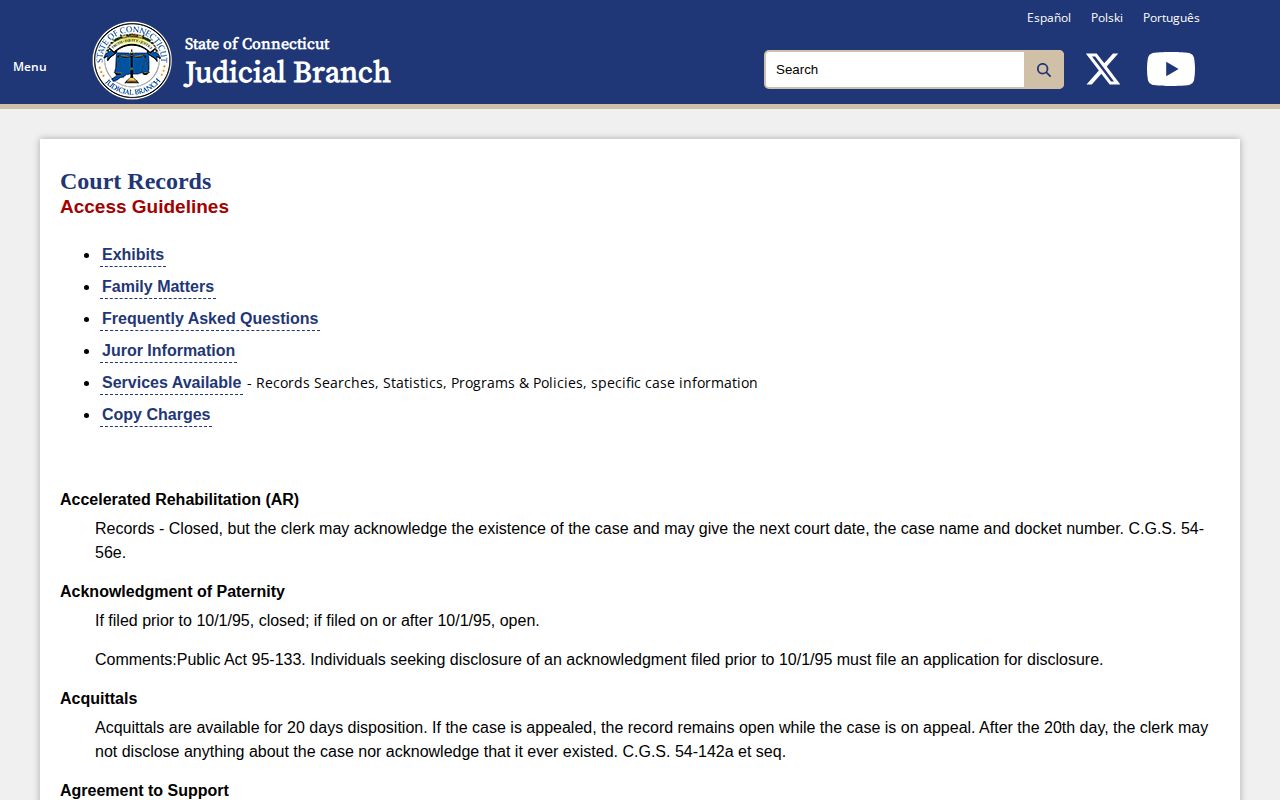
That guidance walks through erased cases, nolles, acquittals, and the offline request path. One takeaway stands out. An online name search is a single public channel. It is not a certificate clearing or confirming any warrant.
Greenwich Warrant Record Differences
A narrow line separates an arrest warrant from what a court does afterward. Greenwich police releases show detectives obtaining Superior Court arrest warrants. Then comes a surrender, a processing, and a transport to arraignment. No complete local index of warrant types exists here. This page will not invent broader categories beyond what the record supports.
| Record or event | What it means | Best source |
|---|---|---|
| Superior Court arrest warrant | Judicial authorization connected to an alleged offense; it is not a conviction | Lawyer, appropriate court, or official police release |
| Known criminal case | A case has reached a stage reflected in the public court system | Judicial Case Look-up and the court clerk |
| Police processing | Local intake after arrest or surrender, sometimes followed by release or court transfer | Greenwich Police record and case materials |
| Court disposition | The later public result, which can differ from the booking charge | Judicial docket |
One archived GPD release tells the fuller story: a person turned themselves in at headquarters, was processed, and went to court the same day. Each step, from the warrant notice to the booking event to the outcome, is its own separate record point.
Greenwich Police Warrant Tips
A tip route exists in Greenwich despite the lack of a wanted roster. For non-emergency information, the department offers telephone and email channels. Both are described as confidential and anonymous. Callers and online tipsters are told their numbers are not traced. There's no Crime Stoppers program here and no reward money. Nobody should expect payment or promise it to anyone else.
Greenwich Police Tip Lines
Non-emergency tips: 203-622-3333
Email: TIPS@greenwichct.org
Immediate danger: 911
Reward policy: No standing reward verified
For current instructions, the Greenwich Police tip page on the town site is the place to look. The interface is shown below so you can spot the official channel at a glance.
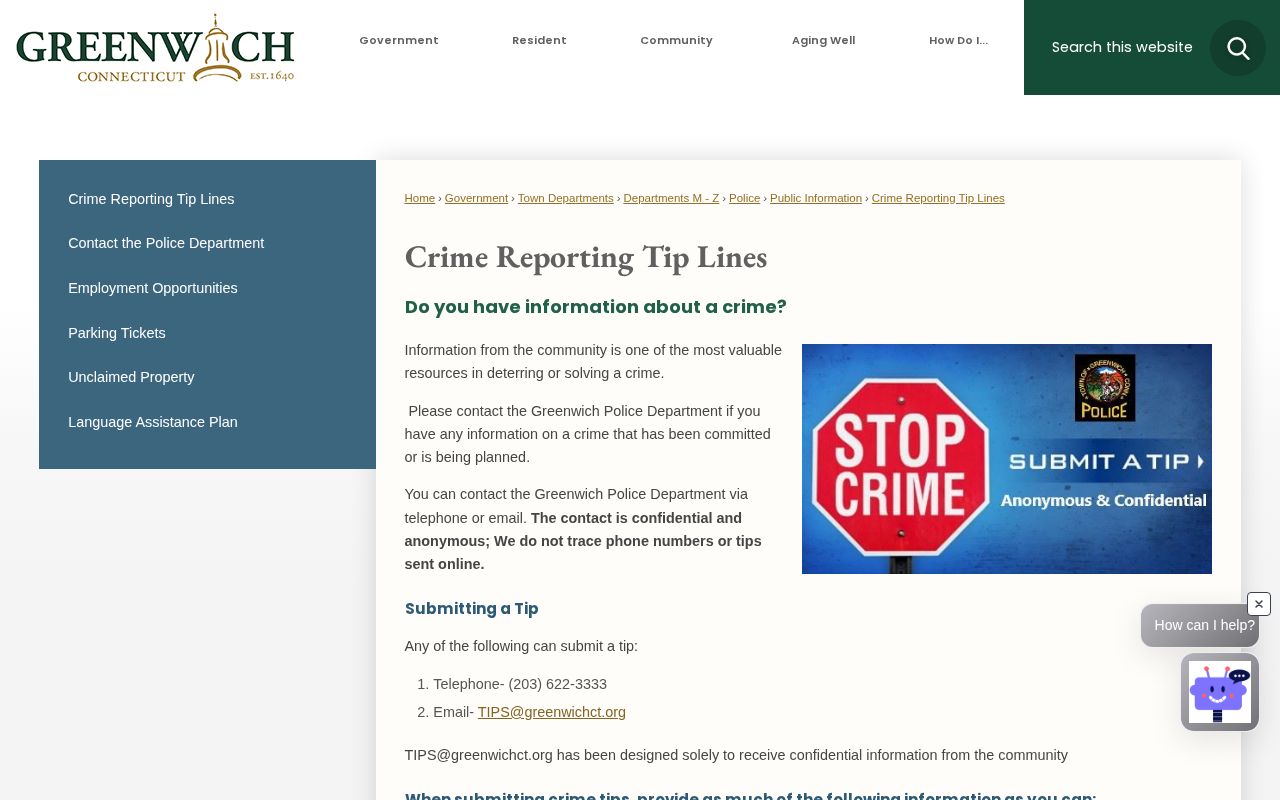
The town keeps emergencies and routine information on separate tracks. A good tip sticks to facts, not guesses. Send it to police directly instead of posting it on social media, where it can do harm and no good.
Greenwich Warrant Alert Limits
Greenwich has no dedicated app for warrants, jail releases, or arrest notices. The town's Connecticut VINE link points elsewhere. Local Greenwich Alerts runs on Everbridge for hazards and emergencies instead. Those notices can arrive by voice, text, email, or app. The town's Alert Center and Notify Me tools push municipal updates too. None of these channels will tell you whether someone has an active warrant, so treat them as background rather than confirmation.
VINE fills a different and later role. Register once, and it sends confidential, opt-in notices about adult court events, protective orders, and custody changes within CT DOC. It does not publish booking photographs. It does not track every Greenwich arrest from the start or keep a public wanted list. For following an eligible case or custody change once the process reaches the covered system, though, it works well.
Each tool answers one question. Police tips are for safety information about another person. A lawyer or the court handles a personal warrant concern. Judicial Case Look-up tracks a public case, and VINE delivers eligible event notices. Mixing those roles invites false reassurance or needless alarm.
Custody status raises similar confusion. A person released after Greenwich Police processing may never enter CT DOC custody at all. Someone held after arraignment may show up in the statewide locator. Neither outcome proves a warrant exists, because custody records and warrant records sit with different agencies. Only the responsible agency can confirm each one.
Note: Alerts and social posts are supplements only; they cannot certify that a Greenwich warrant exists or has been resolved.
Greenwich Police Social Notices
Greenwich Police maintains accounts on Facebook, X, a dispatch X feed, and Instagram. The town's social media directory links to all of them. Expect selected posts there. The feeds carry newsworthy items and public-safety notices, nothing more. They are not a sheriff app, a jail app, or a warrant portal, and they do not stream every arrest. The department also runs no verified "Warrant Wednesday" campaign. Treat the directory as a navigation aid only. It does not prove that every wanted notice reaches social media.
Silence on those feeds means very little. A case can be active with no public post at all. An old post can linger too, long after the legal status behind it has shifted. So before treating any social item as current, recheck the Judicial docket or ask the agency handling the case.