
Official Greenwich Arrest News
Start with the Greenwich Police News Flash for announcements straight from the agency. It works like a highlight reel. It is not a full Greenwich arrest roster. One post might bundle a case reference, a police narrative, charges, bond details, a court date, and an occasional arrest photo. Plenty of posts skip the face entirely. Releases appear when events warrant, and the town sets no fixed window for how long older items stay archived.
The category page adds search tools, an archive, RSS, and notification options. It suits tracking a known name, a date, or a case topic. You never have to copy a booking photograph to use it.
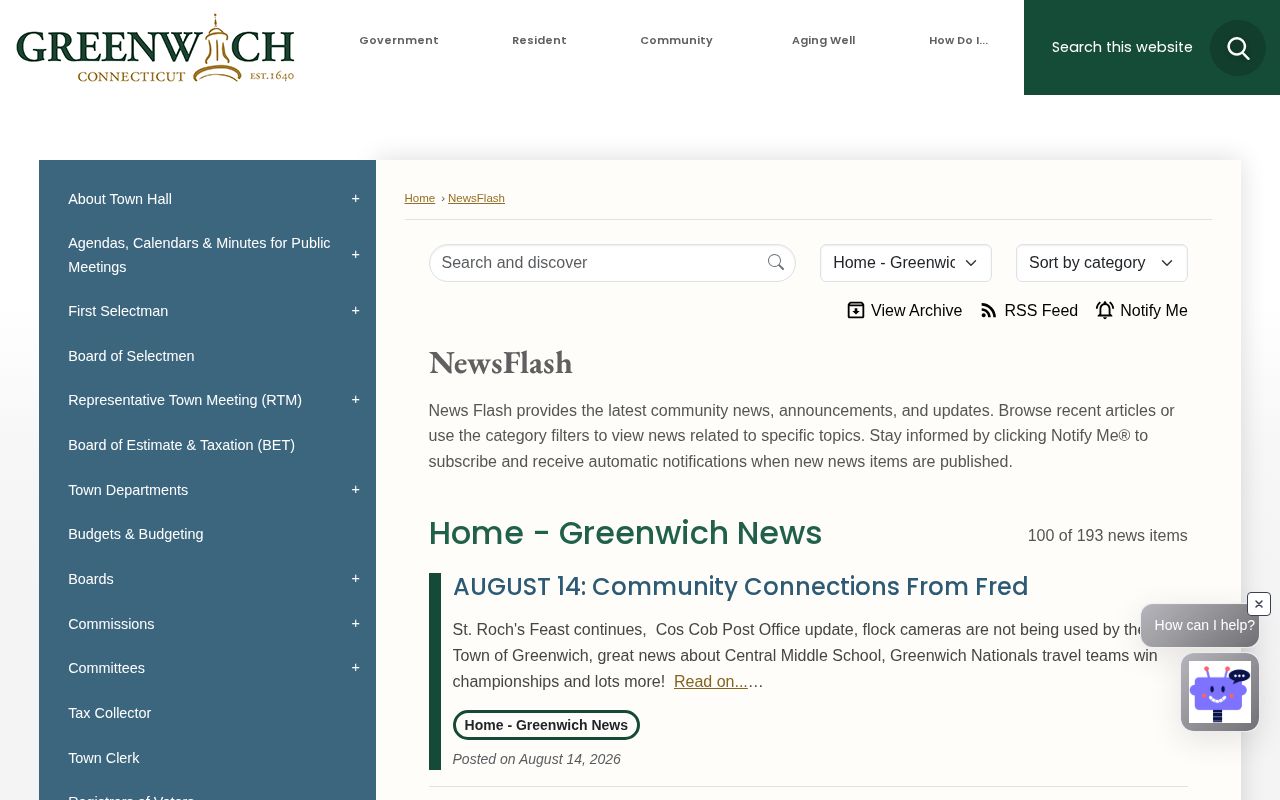
What the archive shows is simple. Greenwich Police chooses which arrests to publicize. Missing from the feed does not mean an arrest never happened. An older charge listed in a post may also have changed since publication.
Social media gives the department more selective channels. Through the town's social media policy page, you can reach Greenwich Police on Facebook and X, plus dispatch on X and an Instagram account. Expect newsworthy and public-safety items there, not a complete booking feed. The Greenwich Crime Data Portal covers prior-day activity, though the town cautions that its numbers are preliminary, subject to revision, and may leave out incidents or arrests. For a fuller explanation of that portal, see the Greenwich booking and activity sources.
Greenwich Mugshot News Outlets
Local reporters fill in what a brief police release leaves out. Greenwich Free Press runs the busiest Police & Fire coverage, sometimes posting several stories within a single week. Greenwich Time and Patch each cover selected arrests and public-safety events. Regional perspective comes from News 12 Connecticut and CT Insider. Cadence and imagery vary from one newsroom to the next. None of them should be mistaken for an official custody list.
| Outlet | Coverage and pace | Photo practice | Where |
|---|---|---|---|
| Greenwich Police | Selective, event-driven releases | Some arrest photos; many posts have no face | News Flash |
| Greenwich Free Press | High-frequency Police & Fire stories | Sometimes police-supplied images; story-based | Police & Fire |
| Greenwich Time | Frequent, event-driven local and regional reports | Often scene, vehicle, or file photos | Crime news |
| Greenwich Patch | Event-driven police, fire, and safety posts | Varied agency, scene, or suspect imagery | Police & Fire |
| News 12 Connecticut | Episodic regional television coverage | Scene, surveillance, police, or generic footage | Greenwich arrest search |
| CT Insider | Statewide crime reporting, sometimes syndicated | Varies by story | Crime coverage |
The captured Greenwich Patch section illustrates the section-based approach without reproducing an intake photograph.
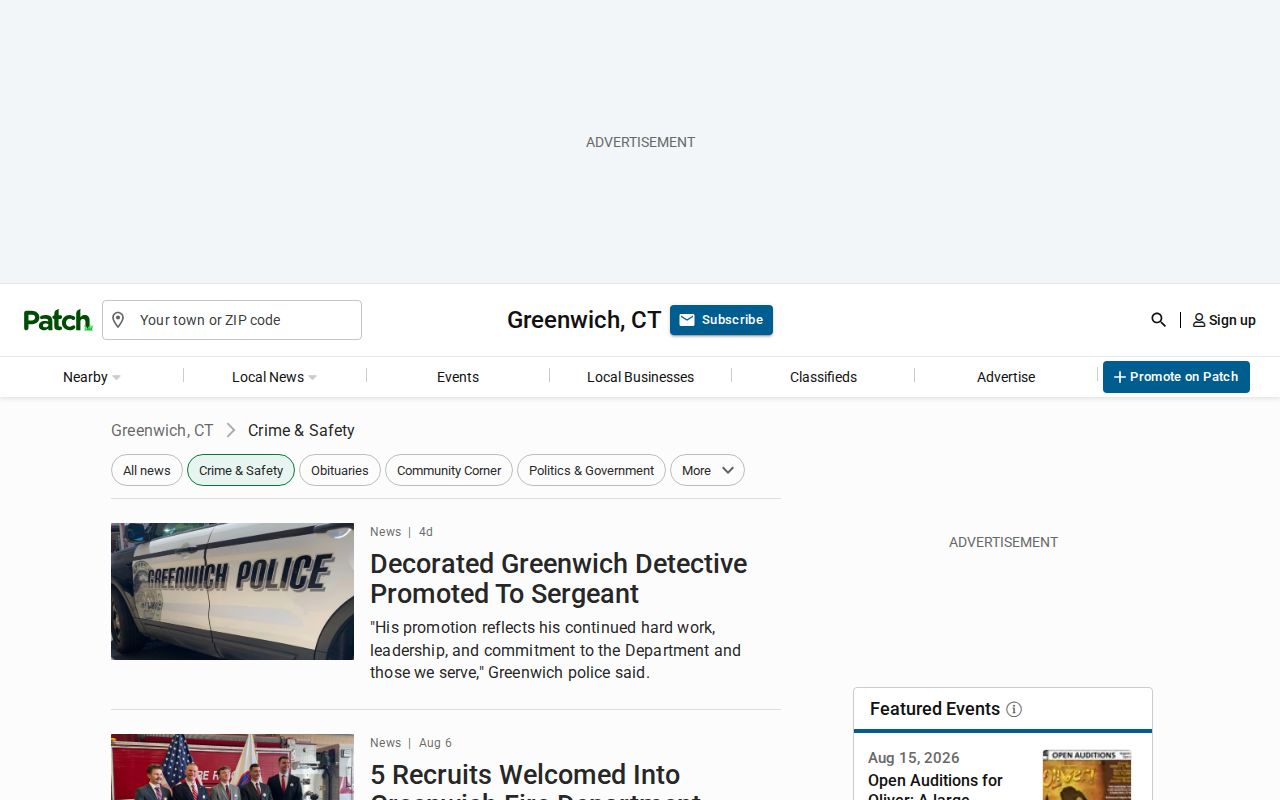
That section mixes police news with other safety items. A story appearing there does not confirm anyone was booked or held.
Greenwich Police Blotter Pattern
Among local outlets, Greenwich Free Press comes closest to a recurring police blotter. It is still journalism, not an official daily roster. Most stories credit arrest facts to GPD reports, releases, or department social posts. Some carry a Greenwich Police supplied image. Others run no booking face at all. Greenwich Time and Patch publish when events prompt them, and they lean toward vehicle, scene, or file photos.
The pattern matters if you search by date. Greenwich has no separate same-day, 24-hour, 48-hour, 72-hour, or weekly booking feed. The Crime Data Portal starts refreshing each morning with prior-day operational data, which is not the same as a rolling 24-hour arrest list. Gaps in the News Flash tell you nothing either. "No story found" only means no selected post turned up.
Neighborhood names do not signal separate jurisdictions. A story out of Cos Cob, Old Greenwich, Riverside, Byram, Glenville, or back-country Greenwich still runs through Greenwich Police and the same state court path. None of those communities operates its own department or booking feed.
How Greenwich Arrest Photos Surface
A Greenwich arrest photo usually reaches the public one of two ways: a proactive police release or a records request. Connecticut law, CGS §1-215, guarantees a defined minimum arrest record while a prosecution is pending. A booking photo is not among the listed minimum fields. Other records showing an arrest or custody go through ordinary Freedom of Information Act review and its exemptions. So one outlet may obtain an image while another story on the same case runs without one.
Greenwich offers a printable police-record form, and "Photos" appears as a category on it. That creates a request path. It does not promise automatic release in every case. Protected material can cover juveniles, victims, witnesses, informants, medical details, open investigations, or sealed content. The agency looks at the actual record and applies the law. And when a publisher declines to show a face, that tells you nothing about whether a photo exists.
Any police-supplied image needs its context attached. The arrest date and the article date can differ, and the charge may change as the case moves. A photo documents a person at one moment. The court decides everything after that.
Note: Greenwich Police posts selected photo-bearing releases rather than a public mugshot gallery, so absence from the news proves little.
Verify Greenwich Arrest News
A story is a starting point. Verification follows the record custodian closest to each fact: Greenwich Police for the arrest event, Connecticut courts for the case, and CT DOC for qualifying later custody. One database cannot answer all three questions.
- Record the outlet, article URL, publication date, alleged event date, and any CFS or case number. Do not rely on a headline alone.
- Search the official Police News Flash and Crime Data Portal for the police context. Remember that both are incomplete for different reasons.
- Request the retained arrest record or photo from Greenwich Police when the public pages are not enough. Name the record and event precisely.
- Open Judicial Case Look-up for the public docket. Ordinary Greenwich criminal matters generally go through GA No. 1 Stamford.
- Read charges, events, pleas, disposition, and sentence fields as the current interface provides them. A no-result can reflect erasure or access limits.
- Use CT DOC only if the person may have entered state pretrial or sentenced custody. Station releases will not appear there.
Greenwich News Versus Court Records
Criminal cases out of Greenwich land at Superior Court, Geographical Area No. 1, in Stamford. That docket tracks what a records search needs: filed charges, hearing dates, pleas, outcomes, sentences. It will not give you a mugshot, though. A Greenwich Police release from the archives shows how the pieces fit. Someone surrenders at the station and gets processed. They ride to court the same day. From that point the case belongs to the Judicial Branch, not the blotter.
Access has real limits. Dismissed and acquitted cases drop out of public view once the statutory window closes and no appeal is pending. A nolle, meaning the prosecutor holds off for now, stays visible for a while before erasure. Once erased, the clerk cannot even confirm it existed. An empty docket does not mean a news story was fabricated. An old headline does not mean its charge is still open, either.
When a news account and an official record clash, trust the source nearest the fact. GPD owns the arrest account. The Judicial Branch owns the outcome. CT DOC owns custody status. Write down when you checked each one rather than reconciling old copy by guesswork.
Unofficial Greenwich Mugshot Landscape
Commercial aggregators sit at the bottom of the reliability pile. Their pages can carry stale charges or miss outcomes entirely. Some jam Connecticut into a county-jail model the state does not use. Recently Booked maintained a Fairfield-labeled set of pages. Yet it called Bridgeport Correctional Center a county facility and pointed to Fairfield town police as though a county sheriff system existed. Nothing there can be assumed to involve Greenwich at all.
Recently Booked's Fairfield page promised a rolling roster and frequent updates. It stays unofficial and structurally wrong for Greenwich purposes. Mugshots.com's Fairfield taxonomy had nothing in it at all. That empty category counts as negative evidence, not a search tool worth your time.
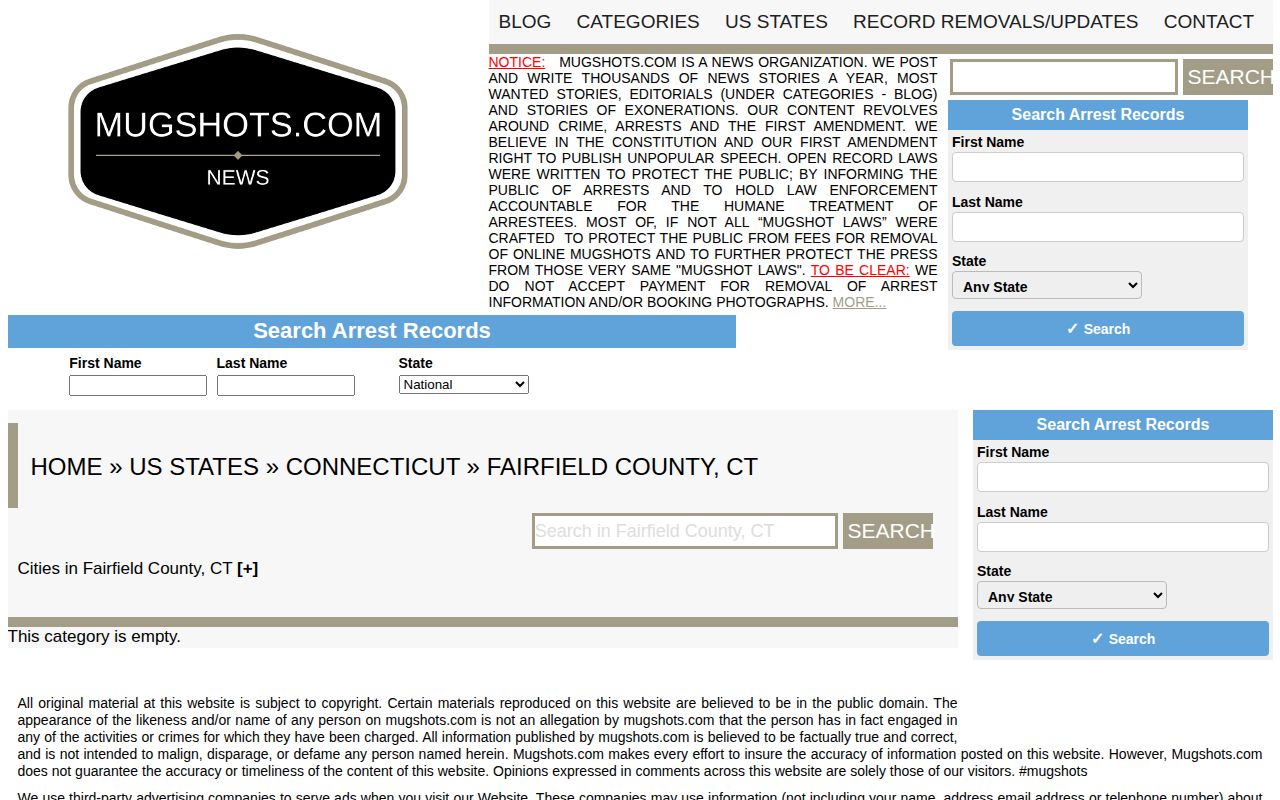
The empty category proves a larger point. A commercial place label, on its own, cannot establish real coverage of Greenwich arrests, and a site's content or policies can shift without any warning.
Other big names fared no better. Busted Newspaper had no Connecticut, Fairfield, or Greenwich section, and search results pointing to Fairfield County, Ohio deserve a quick ignore. Arrests.org showed no verified Connecticut portal and no operator-run route to correct a record for free. Mugshots.zone had no Connecticut property either. No other genuine, current Greenwich mugshot inventory surfaced anywhere.
Treat these results as a map of dead ends, nothing more. An unofficial page can help you discover a lead at most. Confirm the name, the event date, the case number, and the outcome through GPD and the Judicial Branch. Never let an aggregator outrank an official disposition.
Watch the timestamps, too. A claimed booking date, a page's update time, and the day an outlet grabbed the source can all be different dates. Log each one separately, then check them against the police event and the court docket. Syndication deserves the same caution, since CT Insider and Greenwich Time sometimes share material, and two copies of one story are not two confirmations.